
Fire Damage Restoration in Rio Rancho, New Mexico
Fire Damage Restoration in Rio Rancho, New Mexico
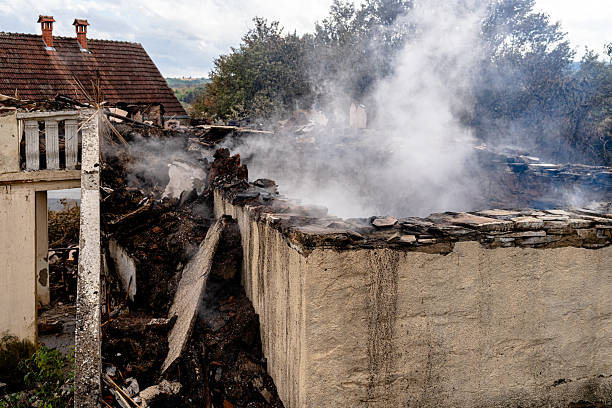
Once the fire is out, the damage is far from over. Charred framing, waterlogged drywall from firefighting hoses, and smoke that has settled into every surface all need to be addressed before your property is livable again. Sandia Disaster Restoration handles fire damage restoration in Rio Rancho—stabilizing the structure, removing firefighting water, repairing fire damage, and restoring your home or business. Call (505) 933-7204 for 24/7 emergency response.
Services We Provide
Water Damage Restoration
Fire and Smoke Restoration
Mold Remediation
Post-Disaster Continuity
Board-Up and Security
Complete Reconstruction
Specialty Cleaning
Storm Damage
What a Fire Leaves Behind
A house fire causes three distinct types of damage, and each one needs a different approach:
1. Direct fire damage. Burned framing, charred drywall, melted fixtures, and compromised structural members. Some of this can be repaired; some must be removed and rebuilt. (Major structural repairs fall under post-disaster reconstruction.)
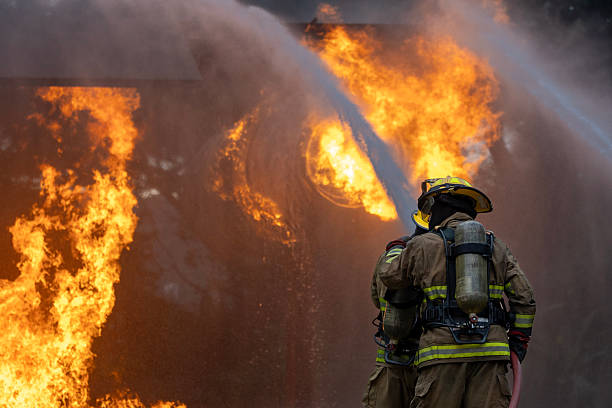
2. Firefighting water damage. Hundreds of gallons of water are used to put out a fire. That water soaks into ceilings, walls, and floors—and if it isn’t extracted and dried quickly, it can lead to mold within days. (See water extraction and structural drying.)
3. Smoke and soot damage. Smoke travels farther than flames, pushing into rooms the fire never touched. Soot settles on surfaces and in HVAC systems, and the odor can linger for months if it isn’t properly removed. (See smoke damage cleanup and odor removal.)
Most fire losses involve all three at once, which is why fire restoration is rarely a single-step job.
How Our Fire Damage Restoration Process Works
Step 1 — Emergency stabilization.
Before restoration can begin, the property has to be made safe and secure. We board up openings, tarp damaged roofing, and secure the site. (See emergency board-up and roof tarping.)
Step 2 — Water removal and drying.
Firefighting water is extracted and the structure is dried to prevent secondary water damage and mold growth.
Step 3 — Damage assessment and documentation.
We map the full extent of fire, water, and smoke damage—including areas that look fine on the surface—and document everything for your insurance claim.
Step 4 — Debris removal and demolition.
Charred materials, ruined contents, and unsalvageable structural elements are removed safely.
Step 5 — Cleaning and deodorization.
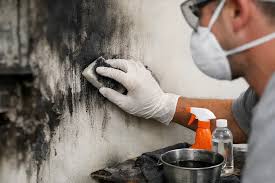
Surfaces are cleaned of soot and smoke residue; HVAC systems are cleaned so smoke isn’t recirculated; and odor is treated at the source. (See smoke damage cleanup and odor removal.)
Step 6 — Repairs and restoration.
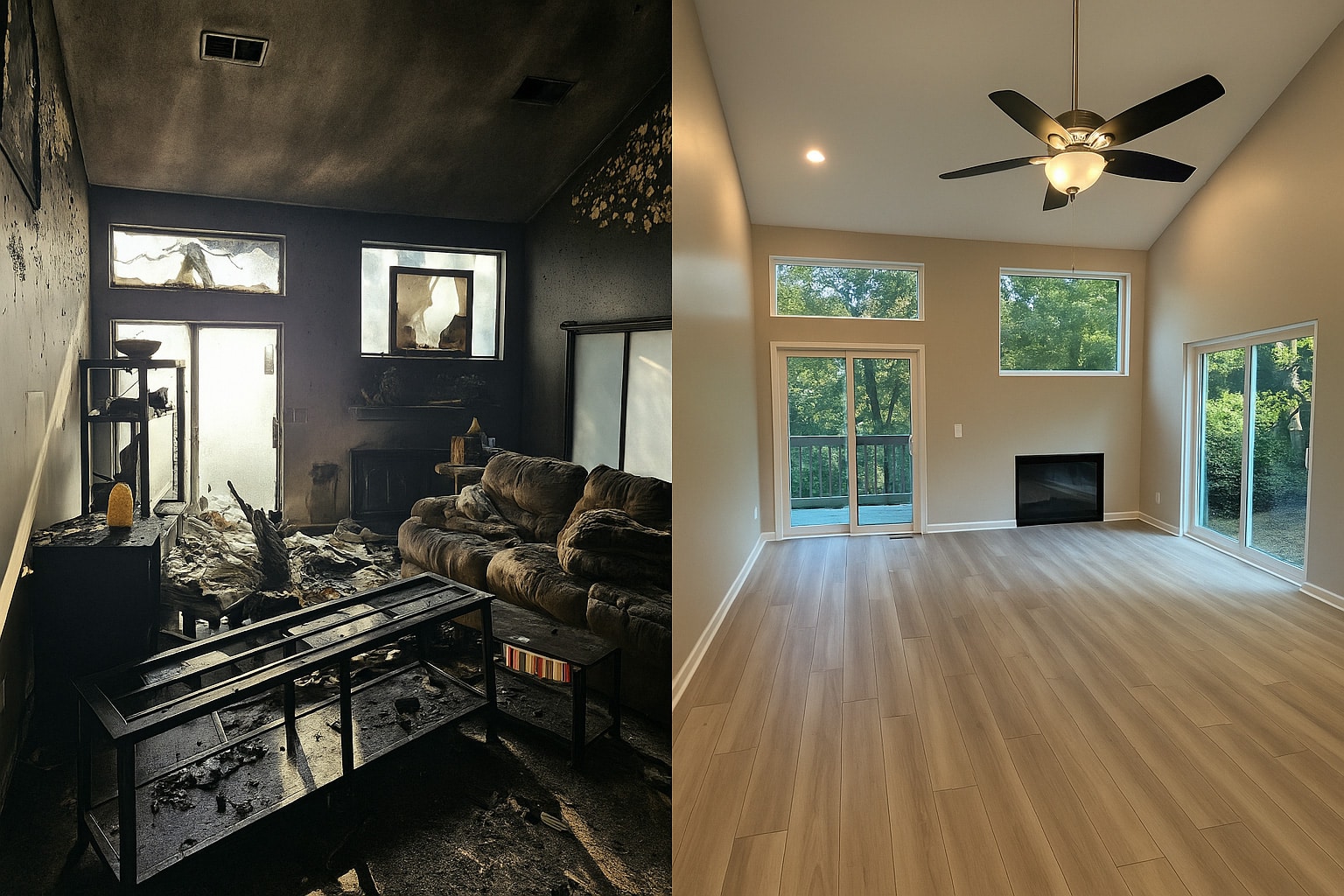
Framing, drywall, flooring, paint, and fixtures are repaired or replaced so the property is restored to pre-loss condition. (Large rebuilds are handled by our post-disaster reconstruction team.)
Fire Damage Restoration for Homes and Businesses
Residential: We restore fire-damaged homes with care for the family living through it—clear communication, a single point of contact, and work scheduled to minimize disruption. Salvageable belongings are cleaned and restored through contents restoration and cleaning. → Residential Services
Commercial: We restore fire-damaged offices, retail spaces, and rental properties, coordinating with property managers and insurers and phasing work to get your business back open as soon as safely possible. → Commercial Services
What Affects the Cost of Fire Damage Restoration?
-
How much of the structure burned — a contained kitchen fire costs far less than one that spread into walls or the attic
-
Firefighting water damage — the more water used, the more extraction and drying is needed
-
Smoke spread — smoke that reached the HVAC system or multiple rooms increases cleaning scope
-
Materials affected — some materials can be cleaned; others must be replaced
-
Reconstruction needed — structural repairs and rebuilds are the largest cost variable
-
Contents — cleaning and restoring belongings adds time and cost, though it’s often cheaper than replacing them
We provide a written estimate before work begins and bill insurance directly.
FAQs
Can I enter my home after a fire?
Only once officials allow reentry. Even then, structural damage, hazardous materials, and contaminated air can make it unsafe. We assess safety before work begins.
Will my insurance cover fire damage restoration?
Most homeowner and commercial policies cover fire damage, including firefighting water damage and smoke cleanup. We document everything and bill your insurer directly.
How long does fire damage restoration take?
Small, contained fires can be restored in a few weeks. Larger losses involving reconstruction can take several months. We give you a timeline after assessment.
Can smoke odor really be removed?
Yes—when it’s treated at the source. Surface cleaning alone isn’t enough; we clean HVAC systems, treat porous materials, and use deodorization methods to eliminate the odor rather than mask it.
Are my belongings salvageable?
Many are. Furniture, electronics, documents, and keepsakes can often be cleaned and restored through contents restoration—often at less cost than replacement.
How to Request Help
Call (505) 933-7204 any time—day or night—for emergency water damage restoration in Rio Rancho. We respond 24/7, provide a clear estimate, and work directly with your insurance.
We also serve Rio Rancho, Albuquerque, Santa Fe, and Sandoval County.